


Best overall: a shampoo-and-conditioner bar set. Best for keeping your liquid cleanser: a refillable dispenser. Best no-new-purchase option: washable cloths you already own. This 2026 guide ranks zero waste bathroom products by the disposable items they replace, with hair-care options from Pleasant Hill Products and practical swaps for the rest of your routine.
- The best zero waste bathroom products replace something you already use, rather than adding another bathroom accessory.
- Pleasant Hill Products shampoo-and-conditioner bar sets are best for shoppers seeking a solid-format hair-care routine.
- Choose refillable dispensers when you prefer liquid cleanser; check the refill packaging before buying.
- Keep existing cloths and accessories in use before replacing them with newly purchased reusable alternatives.
Why this matters
A bathroom full of reusable accessories is not automatically a lower-waste bathroom. The useful question is whether each purchase removes a recurring disposable item from your routine. A washable cloth replaces disposable pads only when you actually wash and reuse it.
For your 2026 bathroom reset, start with 1 replacement product when its current equivalent runs out. Finish usable toiletries, keep functional containers, and reject swaps that make daily care harder. Buying replacements for everything at once creates its own pile of discarded products.
“Zero waste” describes the goal here, not a verified claim that every recommended item produces no waste. Packaging, shipping materials, refills, maintenance, and eventual disposal still need scrutiny.
What makes the best zero waste bathroom products?
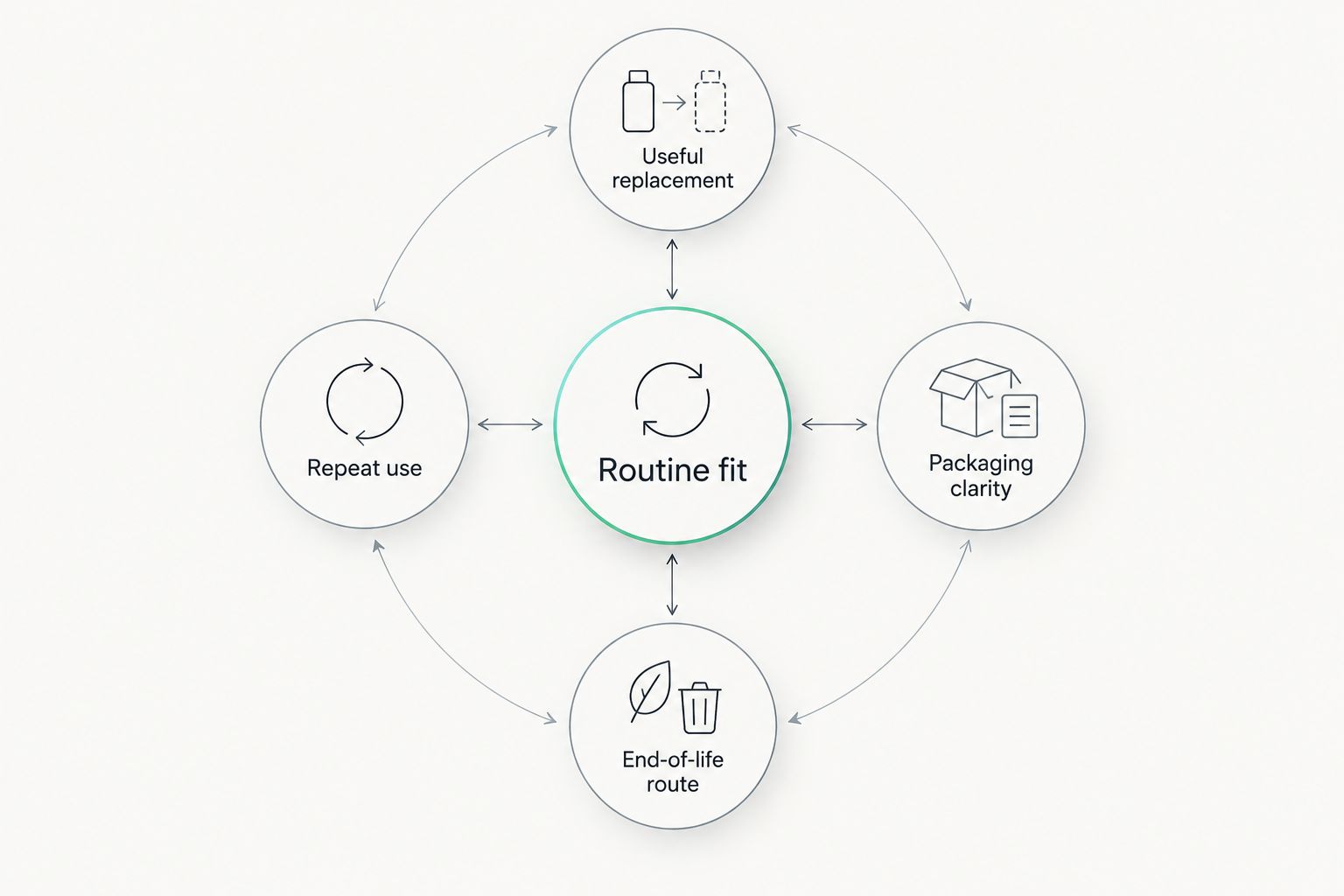
Use these criteria before choosing a product:
- Useful replacement: It takes the place of a disposable product you already use.
- Packaging clarity: You can identify the product wrapper, refill container, and shipping materials.
- Repeat use: The reusable item fits a cleaning or maintenance routine you will follow.
- Routine fit: The cleanser, hair product, or shaving method suits your actual needs.
- End-of-life route: You know how to handle the item when it is empty, worn out, or broken.
The strongest choice meets your routine first. A bar you stop using, or a refill system you cannot replenish, fails the practical test regardless of its packaging.
Zero waste bathroom products at a glance
This 2026 ranking separates different jobs rather than treating every bathroom swap as interchangeable. The hair-care sets are named products; the remaining entries are product types you can assess using the criteria above.
| Item | Best for | Standout feature | Key limitation |
|---|---|---|---|
| Rice Water Shampoo & Conditioner Bar Set | Replacing a bottled shampoo-and-conditioner routine | Shampoo and conditioner in bar form | Suitability and packaging still need checking |
| Tea Tree & Mint Clarifying Shampoo & Conditioner Bar Set | A tea tree-and-mint hair-care preference | Clarifying set with the named oil-and-mint blend | Scent preference does not establish scalp suitability |
| Coastal Waters Cold Process Bar Soap | Switching from liquid body cleansing to bar soap | Solid cleansing format | Needs drainage; packaging requires inspection |
| Refillable dispenser | Keeping a liquid-cleanser routine | Reuses the dispensing container | Refill packaging can remain disposable |
| Washable cloths | Replacing disposable cleansing pads | Can be cleaned and reused | Requires laundering and drying |
| Reusable safety razor | Moving away from disposable cartridges | Handle accepts replaceable blades | Technique and safe blade disposal matter |
| Recycled-paper toilet tissue | Improving an unavoidable disposable purchase | Uses recycled paper fiber | Still single-use; wrapper matters |
| Draining soap dish | Supporting a bar-based routine | Keeps bars out of pooled water | Adds an accessory unless you reuse one |
1. Rice Water Bar Set: best for replacing bottled hair care
The Rice Water Shampoo & Conditioner Bar Set puts both hair-washing steps into solid form. It is the default starting point in this guide for someone who wants to change formats without dropping conditioner from the routine.
Pleasant Hill Products sells this shampoo-and-conditioner bar set, but the format alone does not establish its total environmental impact. Check the full ingredient list, usage directions, and packaging before deciding whether it replaces your current products successfully.
Rice Water Bar Set pros:
- Includes shampoo and conditioner rather than requiring a separate search.
- Uses bar form for both hair-care steps.
- Offers a direct alternative format to a bottled pair.
Rice Water Bar Set cons:
- Requires dry storage between uses.
- The product name alone does not establish suitability for your hair or scalp.
- A solid format does not prove that every packaging component is waste-free.
Best for: You want a paired solid-format hair routine, not an extra treatment alongside existing bottles.
Verdict: Buy to replace a finished bottled routine, not to duplicate it.
2. Tea Tree & Mint Bar Set: best for a named scent preference
The Tea Tree & Mint Clarifying Shampoo & Conditioner Bar Set is the more specific choice for someone seeking a tea tree-and-mint blend. Its supplied description identifies tea tree oil, mint, and Dandrilys as formulation components.
Choose it because the ingredients and intended routine fit your needs. Do not treat the word clarifying, or the presence of tea tree oil, as a diagnosis or a promise to resolve a scalp condition.
Tea Tree & Mint Bar Set pros:
- Pairs shampoo and conditioner in bar form.
- Identifies a tea tree-and-mint blend.
- Gives shoppers a distinct alternative to the rice-water set.
Tea Tree & Mint Bar Set cons:
- A scented formulation is not a universal fit.
- Needs drainage and storage between uses.
- Scalp suitability requires more than reading the product title.
Best for: You specifically want a tea tree-and-mint hair-care option and have checked its ingredients.
Verdict: Buy for the formulation preference; skip if that preference is absent.
Compare the available hair-care sets
These are the Pleasant Hill Products shampoo-and-conditioner bar options featured in this guide. Choose by formulation fit rather than assuming that either set guarantees a completely waste-free routine.


3. Bar soap: best for replacing liquid body cleansing
Bar soap is a straightforward format change when you currently use liquid soap for body cleansing. Coastal Waters Cold Process Bar Soap is a named option to inspect, not a verified packaging-free recommendation.
Keep body cleansing separate from hair care. A soap bar and a shampoo bar are not automatically interchangeable, and the right product still depends on ingredients and your response to it.
Bar soap pros:
- Offers cleansing in a solid format.
- Does not require a pump to dispense the product.
- Fits a simple bar-and-draining-dish setup.
Bar soap cons:
- Needs somewhere to drain and dry.
- Ingredients and fragrance still require checking.
- Wrapping and delivery materials can create waste.
Best for: You want to replace liquid body cleanser and are comfortable using a bar.
Verdict: Buy when your current cleanser is finished; check packaging first.
4. Refillable dispenser: best for keeping liquid cleanser
A refillable dispenser lets you retain the liquid format while reusing the container. Start with a functional dispenser you already have rather than buying a decorative replacement.
For a 2026 refill switch, examine the entire system. A durable pump does not eliminate waste if every refill arrives in another disposable container with no practical recovery route.
Refillable dispenser pros:
- Keeps a familiar liquid-cleansing routine.
- Can reuse an existing working container.
- Separates the reusable dispenser from the consumable cleanser.
Refillable dispenser cons:
- Refill containers still need evaluation.
- Pumps require cleaning and eventually wear out.
- An incompatible refill undermines the system.
Best for: You prefer liquid cleanser and have a practical refill source.
Verdict: Hold the existing dispenser; buy a replacement only when necessary.
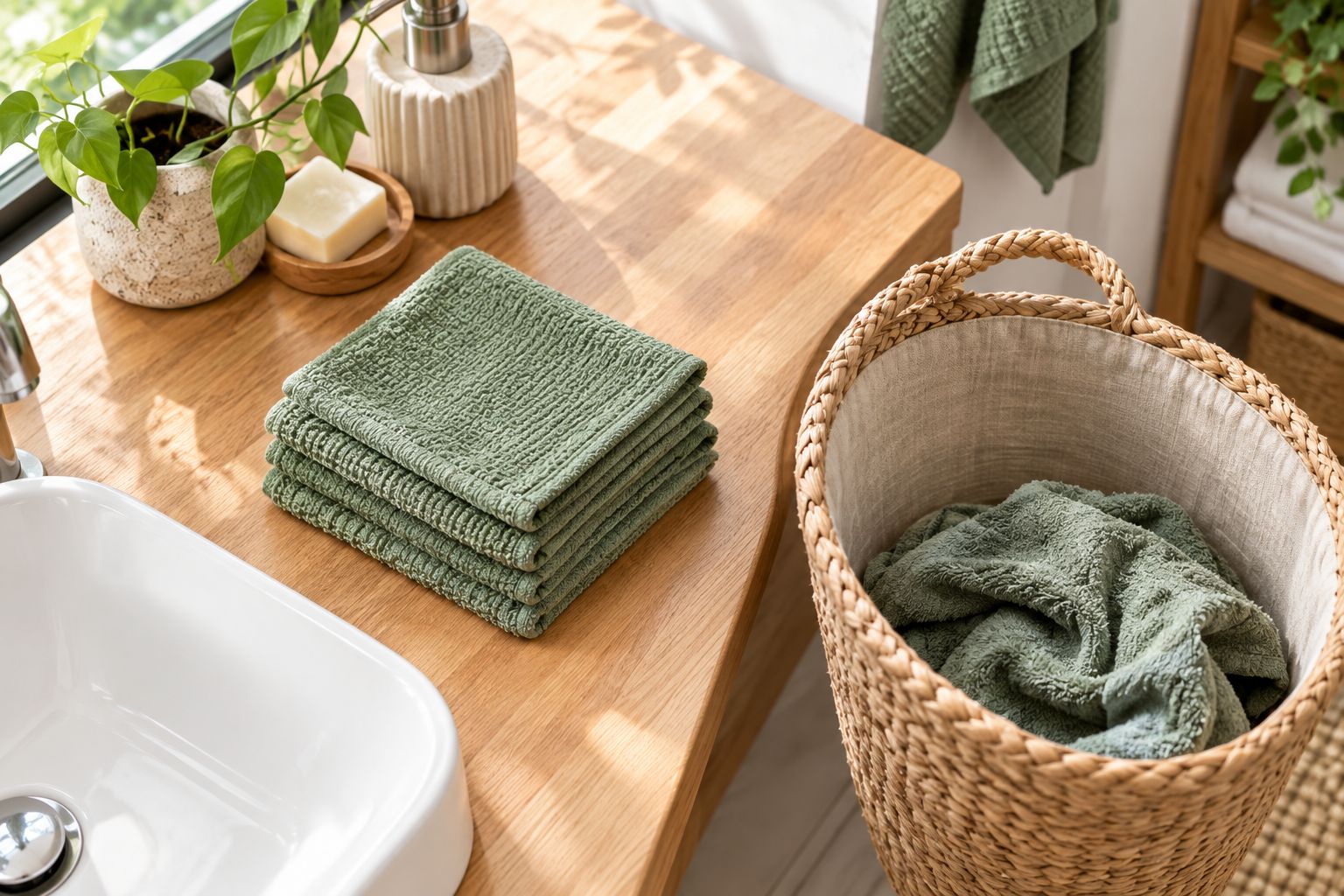
5. Washable cloths: best for replacing disposable cleansing pads
Washable cloths can take over the wiping step currently handled by disposable pads. Use them with your chosen cleansing product; a cloth alone does not guarantee complete makeup removal.
Set aside 2 washable cloths as a starting rotation: one in use and one clean. This is an organizing recommendation, not a claim about how many cloths every person needs. Add more only if your laundry routine requires them.
Washable cloth pros:
- Replaces a recurring disposable wiping item.
- Lets you use suitable cloths you already own.
- Can fit your existing laundry routine.
Washable cloth cons:
- Requires washing and thorough drying.
- Texture and pressure can affect comfort.
- A used, damp cloth needs appropriate handling rather than repeated reuse.
Best for: You already use disposable pads and can maintain a clean-cloth rotation.
Verdict: Buy only if existing suitable cloths cannot do the job.
6. Reusable safety razor: best for avoiding disposable cartridges
A reusable safety razor keeps the handle while allowing blade replacement. It changes the shaving tool, not the need for careful technique or safe disposal.
Choose this swap only if you want to learn the method. Replacing a working razor without a plan to use the new one adds equipment rather than solving a recurring waste problem.
Reusable safety razor pros:
- Retains the handle across blade changes.
- Replaces a cartridge-based shaving format.
- Allows the handle and blade to be handled separately at end of use.
Reusable safety razor cons:
- Requires technique suited to the tool.
- Used blades remain sharp.
- Local disposal and collection rules need checking.
Best for: You shave regularly and want a reusable handle with replaceable blades.
Verdict: Buy when ready to change technique; skip impulse replacement.
7. Recycled-paper tissue: best for disposable essentials
Toilet tissue remains disposable even when made from recycled paper. Its role in this guide is narrower: evaluate the fiber source and packaging of an essential purchase rather than calling it waste-free.
In 2026, inspect the pack rather than relying on earthy colors or environmental language. Recycled content, wrapping, and your local handling rules are separate questions.
Recycled-paper tissue pros:
- Uses recycled paper fiber.
- Does not require a new bathroom routine.
- Addresses a purchase you already make repeatedly.
Recycled-paper tissue cons:
- Remains a single-use product.
- Packaging varies between products.
- Recycled content alone does not describe the full environmental impact.
Best for: You want to improve an existing disposable purchase without adding equipment.
Verdict: Buy after checking fiber information and wrapping.
8. Draining soap dish: best for supporting solid toiletries
A draining dish gives soap or hair-care bars somewhere to sit away from pooled water. Check whether your current bathroom already has a suitable draining surface before adding another accessory.
The dish supports your routine; it is not a cleanser and does not make a bar waste-free. Keep it clean and choose a layout that separates products you need to identify easily.
Draining soap dish pros:
- Keeps bars away from standing water.
- Gives solid toiletries a designated resting place.
- Can reuse an accessory you already own.
Draining soap dish cons:
- Requires cleaning.
- Poor placement can leave it exposed to constant spray.
- Buying a new dish creates another item to maintain.
Best for: You use solid toiletries and lack a suitable draining surface.
Verdict: Hold a functional existing dish; buy only to solve a storage problem.
How this ranking works
The ranking prioritizes useful replacement, routine fit, and manageable maintenance. It does not claim laboratory testing, lifecycle measurements, or verified waste savings.
Before buying, make 3 packaging checks: product wrapping, refill packaging where applicable, and delivery materials. These checks expose what a product-format claim leaves unanswered. Local recycling acceptance must be checked separately.
Which zero waste bathroom products should you choose?
Choose the product that replaces your next finished disposable item. For bottled hair care, start by assessing a shampoo-and-conditioner bar set. For disposable cleansing pads, start with washable cloths you already own.
Pleasant Hill Products shampoo-and-conditioner bar sets are best for shoppers seeking a solid-format hair-care routine. Check the formulation before committing, then make storage part of the switch.
Your best 2026 bathroom is not the one with the most newly purchased reusable products. It is the one where useful items stay in service and replacement purchases have a clear job.
FAQ
What are the best zero waste bathroom products for beginners?
The best beginner swaps replace something you already use: washable cloths for disposable pads, or suitable bars for bottled toiletries. Finish the current product and check the replacement's packaging before switching.
Are shampoo bars automatically zero waste?
No, shampoo bars are not automatically zero waste. The solid format does not establish what happens to wrapping, delivery materials, or the product at the end of use.
Which Pleasant Hill Products hair-care set should I choose?
Choose the Rice Water Shampoo & Conditioner Bar Set for the rice-water option, or the Tea Tree & Mint Clarifying Shampoo & Conditioner Bar Set for a tea tree-and-mint preference. Check the complete ingredients and directions against your hair and scalp needs.
Is bar soap better than a refillable liquid dispenser?
Bar soap is the better fit when you want solid cleansing; a refillable dispenser is the better fit when you want to keep liquid cleanser. Compare packaging and routine fit rather than assuming one format always creates less waste.
Do I need to replace every bathroom product at once?
No, keep usable toiletries and functional accessories in service. Replace products as they run out or stop working instead of discarding them for a matching reusable collection.
Can I use washcloths instead of disposable makeup pads?
Yes, washable cloths can replace the wiping step provided you clean them between uses and choose a comfortable texture. Use an appropriate cleanser rather than assuming the cloth alone removes every product.
How do I dispose of used safety-razor blades?
Follow your local waste or blade-collection instructions for used razor blades. Keep sharp blades safely contained while arranging disposal, and do not assume loose blades belong in household recycling.
What should I check before buying a zero-waste bathroom product?
Check what disposable item it replaces, how you will maintain it, and what happens to its packaging. A product that adds complexity without replacing anything is not a useful first swap.
One last thing
Audit the bin, not the bathroom shelf. Look at what you actually throw away, then select the replacement that addresses that item. A reusable product earns its place through repeated use, not through its appearance in a zero-waste shopping list.