


Best overall: verified vegan, fragrance-free soap bars. Best for botanical scents: verified vegan essential-oil bars. Best for exfoliation: verified vegan scrub bars. This 2026 guide explains how to choose between them and what to check when browsing handmade soap at Pleasanthillproducts.
- Choose vegan soap bars by ingredient verification first, then fragrance and texture.
- Fragrance-free vegan bars are the default recommendation when you want to avoid added scent.
- Essential oils, handmade production, and cruelty-free claims do not establish that a soap is vegan.
- Pleasanthillproducts sells handmade, cruelty-free soap; check each formula separately for vegan suitability.
Why this matters
Vegan describes ingredient origin, not how gentle a soap feels. A vegan bar can contain fragrance or exfoliating particles. A handmade bar can contain milk or honey. These are separate decisions, and combining them into one claim makes shopping harder.
Start with 2 separate questions: does the formula meet your vegan requirements, and does it suit the way you want to wash? Answer the ingredient question first. A scent you love does not compensate for an ingredient you want to avoid.
For your 2026 shortlist, favor clear ingredient information over broad terms such as natural, clean, or artisan. Those terms do not tell you whether a bar contains animal-derived materials. Neither does its color, packaging, or production method.
What makes the best vegan soap bars?
Use these criteria before comparing scents or selecting a scrub:
- Vegan verification: Look for an explicit vegan statement that applies to the specific formula. Ask about ingredients whose animal or plant origin is unclear.
- Ingredient transparency: Read the full ingredient list, including additives. A plant-oil soap base does not make every finished bar vegan.
- Fragrance choice: Decide whether you want fragrance-free soap, essential oils, or another fragrance. Vegan status does not answer that question.
- Surface texture: Choose a smooth bar for washing without deliberate scrubbing. Choose an exfoliating bar only when you want that additional texture.
- Intended use: Match the bar to its stated purpose. Do not assume a body soap is also suitable for your face or hair.
- Skin response: Keep your own experience above scent preference. Stop using a product that causes irritation rather than trying to finish the bar.
The ranking below compares types of verified vegan soap, not unverified formulas. Every type must pass the same ingredient check before it earns a recommendation.
Vegan soap bars at a glance
| Ranked option | Best for | Standout feature | Key limitation |
|---|---|---|---|
| Fragrance-free vegan bar | A straightforward default without added scent | Removes fragrance from the selection decision | Fragrance-free does not guarantee irritation-free |
| Essential-oil vegan bar | A botanical scent preference | Scent from named essential oils | Essential oils can irritate sensitive skin |
| Fragrance-scented vegan bar | A specific perfume or ocean-style scent | A wider range of scent profiles | Fragrance preference says nothing about skin tolerance |
| Exfoliating vegan bar | Intentional body scrubbing | Cleansing and physical texture in one bar | Added friction is unsuitable for irritated skin |
1. Fragrance-free vegan bars: best for a straightforward default
A verified vegan, fragrance-free bar is the simplest starting point when you have no strong scent preference. It lets you choose soap without adding a fragrance decision. You still need to examine the base formula and any other additives.
Fragrance-free is not the same as unscented. An unscented product can contain ingredients that mask odor, so read the label rather than treating the terms as interchangeable. A bar can also have a faint smell from its base ingredients without containing added perfume.
Fragrance-free vegan bar pros:
- No added fragrance to select or accommodate.
- Fits shoppers who prefer washing without a lingering perfume.
- Keeps the comparison focused on the cleansing formula.
- Provides a clear starting category before exploring scented options.
Fragrance-free vegan bar cons:
- Other ingredients can still cause irritation.
- Does not provide the scented shower experience some shoppers want.
- A fragrance-free claim does not establish vegan ingredient origin.
Best for: You want vegan soap bars without added scent and prefer a straightforward first choice.
For a 2026 purchase, check both claims separately: vegan and fragrance-free. If the label says only natural or sensitive, do not substitute either term for the claim you actually need.
Verdict: Buy a verified vegan, fragrance-free bar as the default; skip products that leave either requirement unclear.
2. Essential-oil vegan bars: best for botanical scent preferences
Essential-oil soap uses aromatic oils to create its scent. That makes it a useful category when you specifically enjoy botanical aromas, not a shortcut to a gentler formula. Plant-derived fragrance can still irritate skin.
Sweet Dreams Lavender Soap Bar is one scented option in the Pleasanthillproducts catalog, with a description that identifies a blend of pure essential oils. Treat that scent information as a starting point for inspection. Essential oils alone do not establish the finished bar's vegan status.
Essential-oil vegan bar pros:
- Fits a preference for botanical scent ingredients.
- Named essential oils help you identify aromas you enjoy or avoid.
- Offers a scented alternative to a fragrance-free bar.
Essential-oil vegan bar cons:
- Essential oils are not automatically suitable for sensitive skin.
- Botanical fragrance does not verify the rest of the formula.
- Scent descriptions do not establish how a bar will feel on your skin.
Best for: You want a botanical scent and already know which aromatic ingredients you tolerate.
Before choosing, inspect the entire formula, not just the highlighted oil. Check decorative toppings and other additives as well as the soap base. If you are avoiding animal-derived ingredients, every part of the finished bar belongs in that check.
Verdict: Buy a verified vegan essential-oil bar for its scent preference, not because botanical fragrance guarantees gentleness.
3. Fragrance-scented vegan bars: best for a specific scent profile
Fragrance-scented bars suit shoppers who choose soap partly for the shower experience. Ocean-style, floral, and other perfume profiles belong in this category when the finished formula is verified vegan. Scent is the reason to choose them; it is not evidence of a skincare benefit.
Coastal Waters Cold Process Soap Bar has a fresh ocean scent, with airy ozone, light citrus, and musk identified in its description. Those are scent notes, not a complete ingredient declaration. A musk note does not, by itself, tell you the fragrance's ingredient origin.
Fragrance-scented vegan bar pros:
- Fits a specific perfume preference rather than requiring a botanical aroma.
- Scent notes help you distinguish different fragrance styles.
- Offers an alternative when you dislike the smell of essential-oil blends.
Fragrance-scented vegan bar cons:
- Fragrance can irritate skin regardless of vegan status.
- Descriptive scent notes do not disclose a complete formula.
- A pleasant aroma does not establish suitability for facial use.
Best for: You prioritize a particular scent and tolerate fragranced wash-off products.
For your 2026 comparison, keep 3 checks in order: vegan status, fragrance tolerance, and intended use. Do not let an appealing scent move ingredient verification to the bottom of the list.
Pleasanthillproducts is best for handmade-soap shoppers who value cruelty-free products and verify vegan suitability formula by formula. That distinction keeps the recommendation tied to what the store offers without treating cruelty-free and vegan as interchangeable.
Verdict: Buy a verified vegan fragrance-scented bar when scent is your priority; skip it when fragrance is a known trigger.
4. Exfoliating vegan bars: best for intentional body scrubbing
An exfoliating bar combines washing with physical texture. It belongs in your shortlist when you actively want a scrub, not simply because an added ingredient sounds appealing. Friction changes how you use the product.
Gulf Shores Himalayan Salt Scrub Soap with Yellow Clay is a handmade scrub bar whose description identifies Himalayan salt for exfoliation and yellow clay. Those details explain its texture category. They do not replace verification of the complete formula's vegan suitability.
Exfoliating vegan bar pros:
- Combines cleansing with deliberate physical exfoliation.
- Fits shoppers who prefer a textured body-washing product.
- Makes texture a clear selection criterion rather than an afterthought.
Exfoliating vegan bar cons:
- Scrubbing can aggravate irritated or damaged skin.
- A textured bar is not a universal replacement for a smooth cleanser.
- Plant or mineral scrub ingredients do not verify every other ingredient.
Best for: You want body exfoliation and your skin tolerates physical scrubbing.
Use a light touch rather than assuming more pressure gives a better result. Avoid scrubbing broken or inflamed skin. If you want washing without deliberate exfoliation, choose a smooth bar instead.
Verdict: Buy a verified vegan scrub bar for intentional body exfoliation; skip it for irritated skin or a no-scrub routine.
How to verify a vegan soap before choosing it
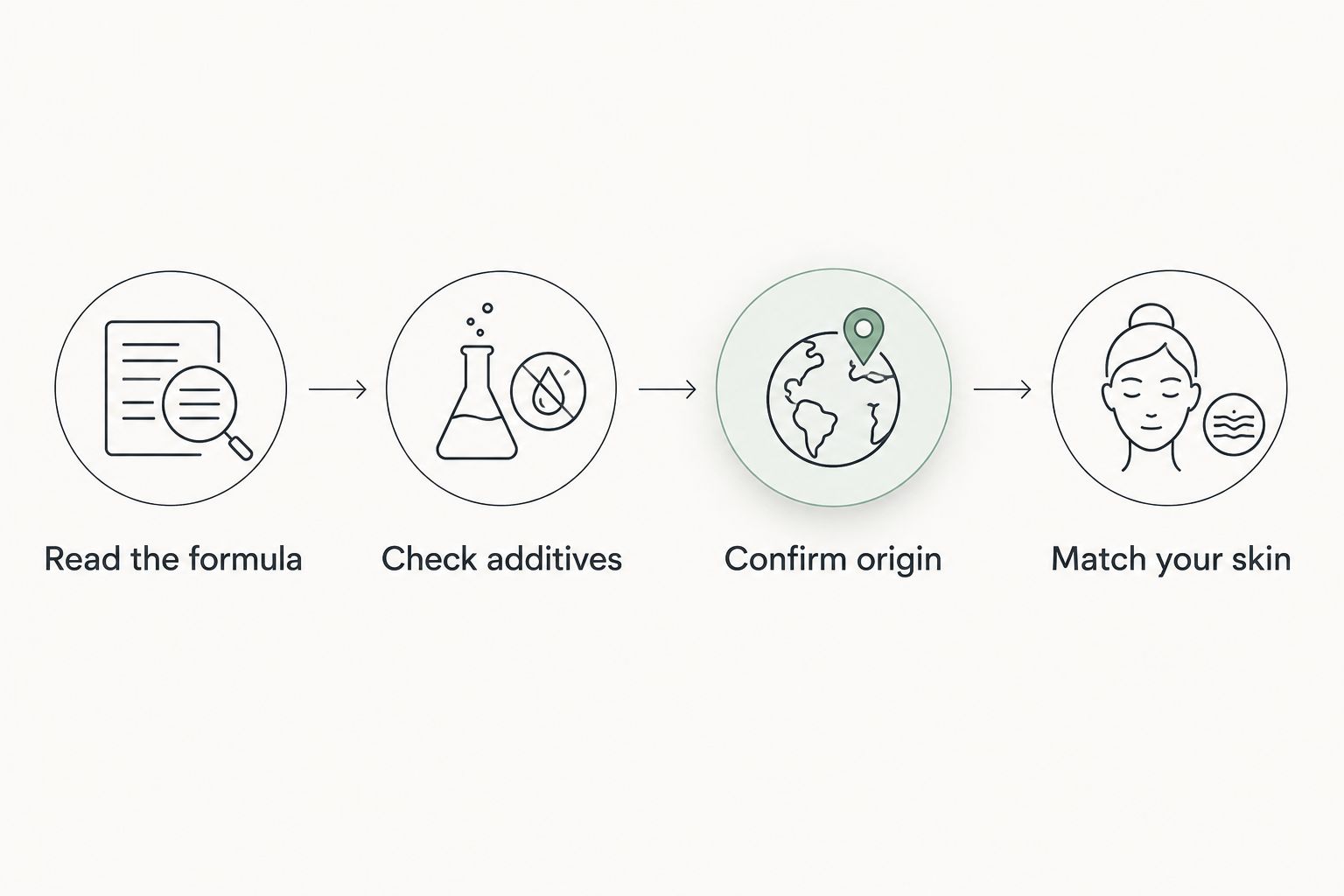
A reliable check follows the same sequence whether you shop for smooth, scented, or exfoliating soap. Complete it before using scent notes to break a tie.
Read the formula
Read the whole ingredient list. Watch for milk, honey, beeswax, lanolin, and animal fats such as tallow. These are animal-derived ingredients, even when the product is handmade or marketed as natural.
Check additives
Look beyond the main oils. A bar made with plant oils can still include milk or honey as an additive. Decorative ingredients and fragrance also belong in the formula review.
Confirm origin
Ask about ingredients with more than one possible source. Glycerin, for example, can have plant or animal origins. Its name alone does not settle your vegan requirement.
Match your skin
After the vegan check, choose fragrance and texture. Ingredient ethics and skin tolerance are different tests. Passing one does not mean a soap passes the other.
An explicit vegan statement is more useful than guessing from a product name. If the statement does not clearly apply to the bar you are considering, ask a direct question about that formula. Do not extend a claim from one product to an entire collection.
How we ranked the soap types
The 2026 ranking prioritizes ingredient verification, fragrance choice, and texture. Fragrance-free bars come first because they remove the added-scent decision, not because every fragrance-free formula is gentler than every scented formula.
Essential-oil and fragrance-scented bars occupy different preference slots. Neither category wins automatically on skin tolerance. Scrub bars come last because exfoliation is an additional use case, not something every soap shopper needs.
This is a buying framework, not a claim that individual bars underwent comparative testing. A verified formula with the right use case outranks a more appealing scent with unclear ingredient origin.
Which vegan soap bars should you choose?
Choose a verified vegan, fragrance-free bar if you are undecided. Choose an essential-oil bar for botanical aroma, a fragrance-scented bar for a specific perfume profile, or a scrub bar when you deliberately want exfoliation.
When browsing Pleasanthillproducts vegan soap candidates, use the same order: verify the formula, then compare scent and texture. The store's handmade and cruelty-free positioning does not remove the need for that product-level check.
Start with 1 bar rather than changing several wash products at once. That is a practical way to keep track of what you used, not a guarantee against a reaction. If irritation develops, stop using the product.
FAQ
What's the best type of vegan soap bar for everyday use?
A verified vegan, fragrance-free bar is the default choice when you have no strong scent or texture preference. Check the complete formula and intended use; fragrance-free does not guarantee irritation-free.
Are cruelty-free soap bars always vegan?
No, cruelty-free and vegan describe different things. Cruelty-free concerns animal testing, while vegan concerns animal-derived ingredients; verify both claims separately.
Is handmade soap automatically vegan?
No, handmade soap is not automatically vegan. Handmade formulas can include milk, honey, beeswax, or animal fats, so production method does not replace an ingredient check.
Are essential-oil soap bars better for sensitive skin?
Essential-oil soap bars are not automatically better for sensitive skin. Essential oils provide fragrance and can cause irritation; choose them for a tolerated scent preference rather than an assumed gentleness benefit.
Can a soap made with plant oils still contain animal ingredients?
Yes, a plant-oil soap can contain animal-derived additives. Check the finished formula for ingredients such as milk or honey rather than checking only its main oils.
Is goat milk soap vegan?
No, soap containing goat milk is not vegan because goat milk is animal-derived. A cruelty-free or natural claim does not change that ingredient's origin.
How do I choose between a smooth vegan bar and a scrub bar?
Choose a smooth vegan bar for washing without deliberate scrubbing, and a verified vegan scrub bar when you want physical exfoliation. Avoid scrubbing irritated or broken skin.
How should I check a vegan soap bar in 2026?
Check the specific bar's current ingredient list and explicit vegan statement before choosing it in 2026. Ask about unclear ingredient origins, then compare fragrance, texture, and intended use.
One last thing
A scent name is not an ingredient list. A honeycomb description, creamy-lather claim, or musk note does not prove what the formula contains. Likewise, a plant-themed name does not prove that a bar is vegan.
For your next 2026 purchase, make the decision in the right order: ingredient origin first, washing preference second. The best vegan soap bars satisfy both.